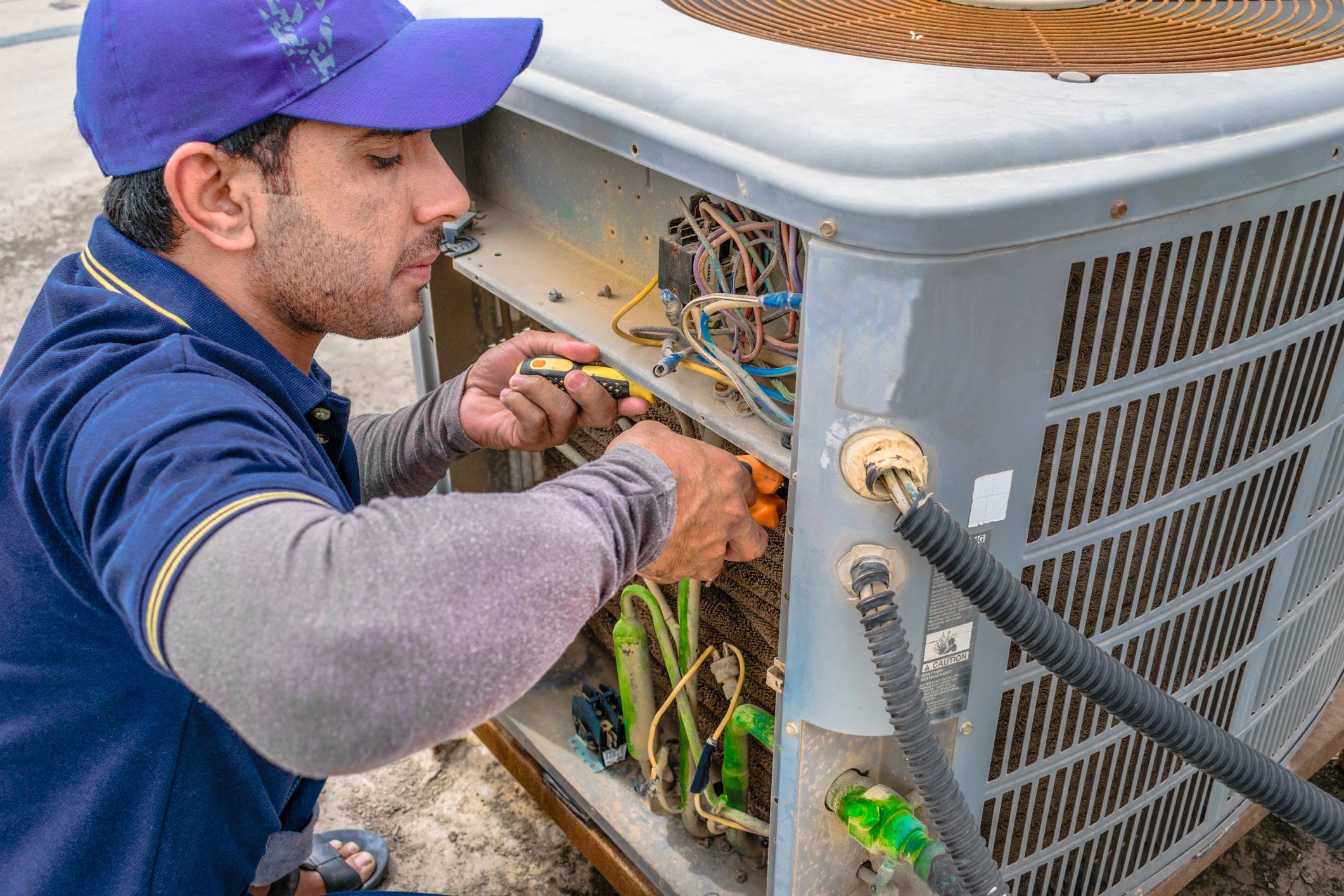
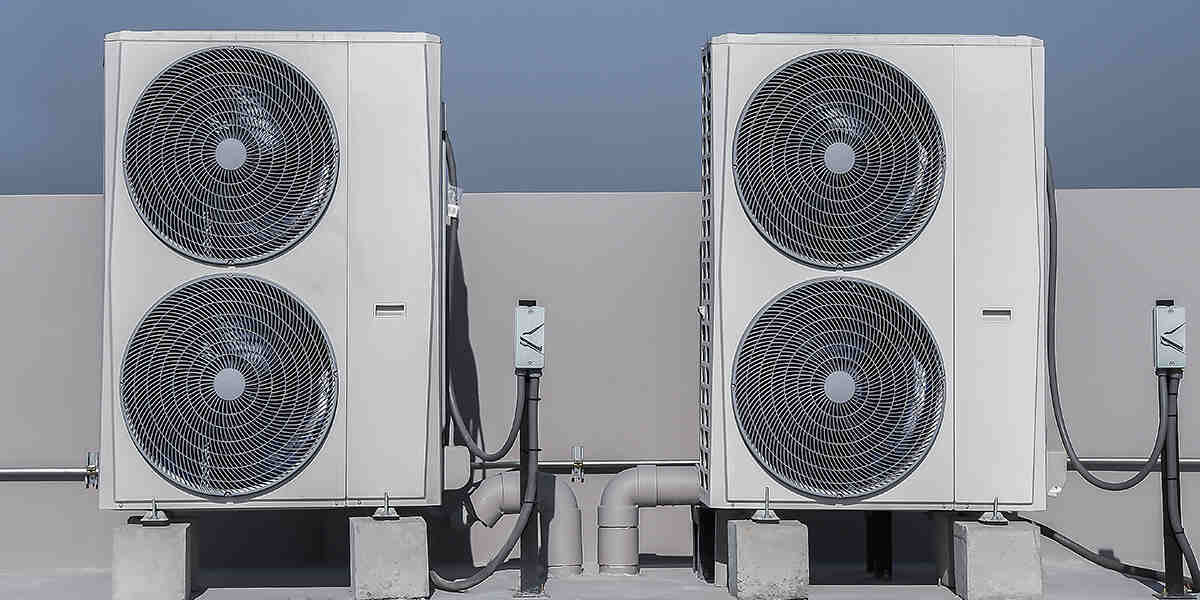

Have you ever gone a day without your air conditioner here in Cedar Hill, TX? You’ll quickly agree that it’s an experience you should avoid repeating! Most residents here will agree that their air conditioning units are highly crucial for their comfort all through the year.
However, not many people know the key parts that come together to produce that consistent stream of cool air when temperatures start to hover around 100 degrees. In this post, Dial One Johnson Plumbing, Cooling & Heating, the leading AC repair company in Cedar Hill, TX, covers the parts of an air conditioner you need to know.
1. The Refrigerant
When you’re thinking about parts of an air conditioner, your mind likely doesn’t picture the refrigerant, and that’s not surprising because you don’t see it. However, it’s arguably the most important part of the air conditioner. As we progress, you’ll see how the bulk of the other major components are there to “serve” the refrigerant.
The refrigerant is a chemical compound that runs inside your air conditioning system. It’s crucial to the heat exchange process because it absorbs the heat from your indoor space and moves it to the outside. The compound changes from gas to liquid and back to gas through the process.
2. The Compressor
Most technicians will tell you that the compressor is the heart of your air conditioning system. It’s responsible for pressurizing and circulating the refrigerant, keeping it flowing through the system. The compressor’s efficiency ultimately determines the air conditioner’s efficiency as well.
Many HVAC technicians will advise doing your best to avoid compressor problems because it’s one of the most expensive parts of an air conditioner.
3. The Condenser Coil
The condenser coil sits in your air conditioner’s outdoor unit. It’s responsible for receiving the heated refrigerant and delivering the absorbed heat into the surrounding air. The refrigerant enters the coil as a high-pressure gas and loses its heat to transform into a liquid before it goes back up the channel to resume its job of heat absorption.
4. The Evaporator Coil
The evaporator coil is the opposite of the condenser coil. You’ll find it inside the air conditioner’s indoor unit. The refrigerant enters the evaporator coil as a high-pressure liquid and then expands and evaporates to turn into a low-pressure gas. As the refrigerator evaporates, it will absorb heat from your indoor air. That’s how the space feels cooler.
5. The Expansion Valve
The expansion valve is another key component that helps regulate the flow of the refrigerant. It controls the pressure of the refrigerant and also determines how much of the refrigerant will enter the evaporator coil. Therefore, the expansion valve is key to optimal cooling.
6. The Blower Fan
The blower fan is a key part of central air conditioning systems — the most popular type of AC across the country. It helps circulate the cooled air throughout your living space by blowing over the evaporator coils.
In ductless systems, the fan is more compact and positioned inside the air handler. Still, the job is the same. Without the blower fan, the cool air may not reach most parts of your indoor space.
7. The Air Filter
The air filter is one of the simplest parts of an air conditioner, but it’s still crucial. It can trap dust, allergens, and a host of other particles, stopping them from circulating through your indoor air and clogging up your HVAC system.
Using your air conditioner with clean air filters will allow the unit work efficiently. It will also increase the unit’s lifespan in addition to maintaining a healthy indoor air quality.
8. The Thermostat
The thermostat is your air conditioner’s control center. You can use it to communicate the temperature you want to the air conditioner. It also monitors the temperature in the room and will shut down the AC when it has reached your desired temperature.
If you have a forced air system, then the thermostat isn’t really a part of the air conditioner. It controls the air conditioner, but it will sit somewhere outside of the unit.
However, for ductless systems, mini-splits, and some heat pumps, the thermostat is on the air handler, and you can interface with it directly or remotely.
Learn More About Air Conditioner Components From Your Local AC Experts in Cedar Hill, TX
Do you have further questions about the different parts of an air conditioner? Would you like to learn the effect of a power surge on an AC? We can help!
Call Dial One Johnson Plumbing, Cooling & Heating in Cedar Hill, TX, at 972-291-0740.